
NIPT
A solution to accelerate diagnosis
Optimizing the golden time


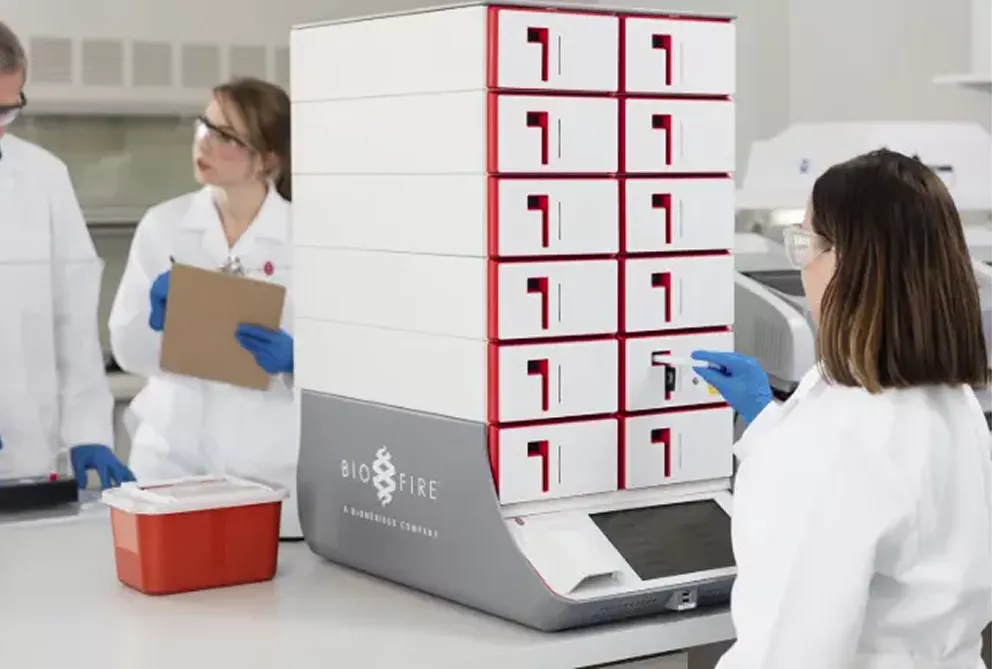
Outstanding advantages of the FilmArray® system
Nested Multiplex PCR
Simultaneous amplification of multiple targets through two consecutive PCR cycles.
Fully closed, 100% automated system
From sample processing and extraction to amplification and result interpretation.
Detection based on Melt Curve Analysis
Accurate identification of pathogens and resistance genes.
Turnaround time
1–2 hours depending on the panel.
Technical principle of the FilmArray® Torch
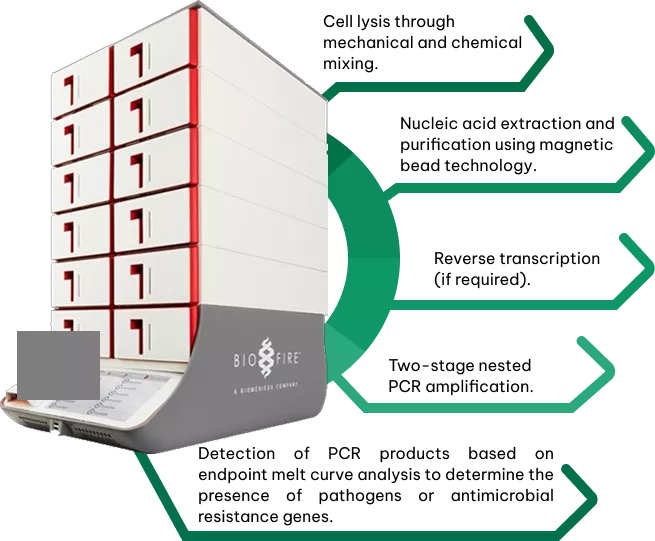
The FilmArray® Torch system is based on nested multiplex PCR technology, using specialized, fully closed reagent pouches. Each FilmArray reagent pouch is designed to contain all reagents required for sample processing and PCR reactions, including:
The entire process is performed automatically on the FilmArray® Torch system and takes approximately 45–80 minutes, depending on the specific panel, excluding pre-analytical sample processing and transportation.

Fast
Results available within 1–2 hours*.
Reduces diagnostic time by 84% compared to conventional culture methods.

Multiplex pathogen detection
Supports diagnosis of up to 43 pathogens and 10 antimicrobial resistance genes.

High accuracy
A fully closed, fully automated system covering the entire workflow from extraction and amplification to analysis and result interpretation.

Quality certifications
Technology certified to international standards such as FDA and CE-IVD, ensuring high reliability.
* Turnaround time calculated from sample loading to result (PXN).
FilmArray® Panels available at OneLab

Acute Respiratory Panel (Respiratory Panel 2.1 Plus)
Indications: Fever, cough, shortness of breath, pneumonia, poor response to antibiotics
Targets detected: 23 targets:
Viruses include: SARS-CoV-2, Influenza A/B, RSV, Rhinovirus/Adenovirus,… and bacteria such as Mycoplasma, Chlamydia pneumoniae, Bordetella pertussis,…
Accuracy: Sensitivity 97.1%, specificity 99.3%

Positive Blood Culture Identification (Blood Culture Identification 2)
Indications: Fever, cough, shortness of breath, pneumonia, poor response to antibiotics
Targets detected: 23 targets:
Viruses include: SARS-CoV-2, Influenza A/B, RSV, Rhinovirus/Adenovirus,… and bacteria such as Mycoplasma, Chlamydia pneumoniae, Bordetella pertussis,…
Accuracy: Sensitivity 97.1%, specificity 99.3%

Gastrointestinal Infection Panel (Gastrointestinal Panel)
Indications: Fever, cough, shortness of breath, pneumonia, poor response to antibiotics
Targets detected: 23 targets:
Viruses include: SARS-CoV-2, Influenza A/B, RSV, Rhinovirus/Adenovirus,… and bacteria such as Mycoplasma, Chlamydia pneumoniae, Bordetella pertussis,…
Accuracy: Sensitivity 97.1%, specificity 99.3%

Meningitis / Encephalitis Panel
Indications: Fever, cough, shortness of breath, pneumonia, poor response to antibiotics
Targets detected: 23 targets:
Viruses include: SARS-CoV-2, Influenza A/B, RSV, Rhinovirus/Adenovirus,… and bacteria such as Mycoplasma, Chlamydia pneumoniae, Bordetella pertussis,…
Accuracy: Sensitivity 97.1%, specificity 99.3%

Pneumonia Panel
Indications: Fever, cough, shortness of breath, pneumonia, poor response to antibiotics
Targets detected: 23 targets:
Viruses include: SARS-CoV-2, Influenza A/B, RSV, Rhinovirus/Adenovirus,… and bacteria such as Mycoplasma, Chlamydia pneumoniae, Bordetella pertussis,…
Accuracy: Sensitivity 97.1%, specificity 99.3%
Fast – Accurate – Optimized Workflow
Optimizing early diagnosis for complex and high-risk clinical conditions

Appointment booking / Test order submission


Sample collection

Sample analysis
at the laboratory

Delivery of hard-copy and electronic results via web portal or application

Professional consultation support before,
during, and after testing
Instructions and Notes
1. Sample collection
The type of specimen depends on the specific panel. For more details, please refer to the FilmArray Sample Collection Guidelines.
2. Sample results
The type of specimen depends on the specific panel. For more details, please refer to the FilmArray Sample Collection Guidelines.
Frequently Asked Questions
1. What should be noted when collecting specimens for FilmArray testing?
Each FilmArray panel uses a different type of specimen. To ensure accuracy, specimens must be collected from the correct site of infection, in sufficient volume, and processed immediately after collection.
OneLab provides standardized sample collection guidelines for each panel. Please download the documents here to ensure specimens meet quality standards.
2. What are the key advantages of FilmArray compared to conventional tests?
Each FilmArray panel uses a different type of specimen. To ensure accuracy, specimens must be collected from the correct site of infection, in sufficient volume, and processed immediately after collection.
OneLab provides standardized sample collection guidelines for each panel. Please download the documents here to ensure specimens meet quality standards.
3. How do rapid results benefit the treatment process?
Each FilmArray panel uses a different type of specimen. To ensure accuracy, specimens must be collected from the correct site of infection, in sufficient volume, and processed immediately after collection.
OneLab provides standardized sample collection guidelines for each panel. Please download the documents here to ensure specimens meet quality standards.
4. How long does it take to receive test results?
Each FilmArray panel uses a different type of specimen. To ensure accuracy, specimens must be collected from the correct site of infection, in sufficient volume, and processed immediately after collection.
OneLab provides standardized sample collection guidelines for each panel. Please download the documents here to ensure specimens meet quality standards.
5. When should FilmArray testing be ordered?
Each FilmArray panel uses a different type of specimen. To ensure accuracy, specimens must be collected from the correct site of infection, in sufficient volume, and processed immediately after collection.
OneLab provides standardized sample collection guidelines for each panel. Please download the documents here to ensure specimens meet quality standards.
Scientific Research
1. Ramanan, P., Bryson, A., Maupin, A. et al. (2016) “FilmArray® Blood Culture Identification Panel evaluation for detection of bloodstream pathogens and key resistance markers.” Journal of Clinical Microbiology. https://journals.asm.org/doi/full/10.1128/jcm.00996-16
2. Thurman, K., Measles, R., … et al. (2017) “Evaluation of the FilmArray® Respiratory Panel in clinical samples.” The Pediatric Infectious Disease Journal. https://academic.oup.com/jpids/article/6/3/267/2957385
3. Smith, J., et al. (2022) “Performance of BioFire FilmArray Pneumonia Panel in Lower Respiratory Tract Infections.” Open Forum Infectious Diseases. https://pubmed.ncbi.nlm.nih.gov/35659683/


